
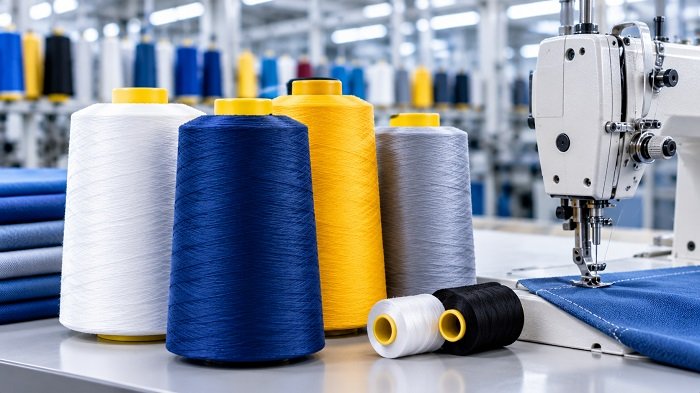
Industrial Sewing Thread Supplier Europe: A Complete Guide for Manufacturers
Industrial sewing plays an important role in manufacturing products that require strong, durable, and reliable stitching. From automotive interiors to footwear, upholstery, protective equipment, and technical textiles, the quality of sewing thread directly affects the performance of finished products.
Finding a reliable Industrial Sewing Thread Supplier Europe is therefore important for manufacturers seeking consistent quality and dependable material specifications.
Industrial sewing threads are available in different fiber types, constructions, thicknesses, and performance grades. Polyester, nylon, and UHMWPE are among the materials used for demanding industrial applications. Each offers different mechanical properties and advantages.
This guide explains the main types of industrial sewing threads, their applications, important selection factors, and what European manufacturers should consider when choosing a supplier.
What Is Industrial Sewing Thread?
Industrial sewing thread is a specially manufactured thread designed for high-speed sewing machines and demanding production environments.
Unlike ordinary household sewing thread, industrial thread must withstand repeated mechanical stress, friction, and tension during manufacturing.
It also needs to maintain seam strength throughout the finished product’s service life.
Depending on the application, manufacturers may require high-tenacity polyester, polyamide (nylon), or ultra-high-molecular-weight polyethylene (UHMWPE) sewing thread.
These materials offer different combinations of tensile strength, flexibility, abrasion resistance, and environmental performance.
Types of Industrial Sewing Thread
Choosing the correct thread starts with understanding the available materials. Different fibers are suitable for different manufacturing requirements.
1. High-Tenacity Polyester Sewing Thread
Polyester sewing thread is widely used in industrial textile manufacturing because of its strength, durability, and resistance to environmental exposure.
High-tenacity polyester is particularly useful for products that require reliable stitching and dimensional stability.
Key benefits include:
-
Good tensile strength.
-
Excellent resistance to sunlight and UV exposure compared with many conventional fibers.
-
Good abrasion resistance.
-
Low moisture absorption.
-
Suitable performance in various outdoor environments.
-
Good dimensional stability.
Common applications:
-
Automotive upholstery.
-
Outdoor furniture.
-
Industrial bags.
-
Tarpaulins and protective covers.
-
Footwear.
-
Heavy-duty textile products.
Polyester is often a practical choice when manufacturers need durable stitching with good weather resistance.
2. Nylon 6 and Nylon 66 Sewing Thread
Nylon sewing thread is valued for its high strength, flexibility, and abrasion resistance.
Both Nylon 6 and Nylon 66 are polyamide materials used in industrial textile applications.
Nylon 6 offers good toughness and flexibility, while Nylon 66 generally provides better thermal resistance and dimensional stability.
Key benefits include:
-
High tensile strength.
-
Good elasticity.
-
Excellent abrasion resistance.
-
Flexibility under repeated movement.
-
Good toughness.
-
Suitable for demanding mechanical applications.
Common applications:
-
Automotive components.
-
Leather products.
-
Footwear manufacturing.
-
Upholstery.
-
Safety equipment.
-
Heavy-duty bags and technical textiles.
Nylon thread is particularly useful when finished products experience repeated movement, friction, or mechanical stress.
3. UHMWPE Sewing Thread
Ultra-high-molecular-weight polyethylene (UHMWPE) is a high-performance material known for its exceptional strength-to-weight ratio.
UHMWPE sewing thread is suitable for specialized applications where high tensile strength and low weight are important.
It offers excellent abrasion resistance and good chemical resistance in many environments.
Key benefits include:
-
Exceptional strength-to-weight ratio.
-
Low material weight.
-
Excellent abrasion resistance.
-
Good chemical resistance.
-
Low moisture absorption.
-
High-performance mechanical properties.
Common applications:
-
Marine textiles.
-
Technical protective equipment.
-
High-performance outdoor products.
-
Industrial reinforcement.
-
Specialized safety products.
-
Heavy-duty technical fabrics.
Manufacturers should evaluate temperature exposure and processing conditions when selecting UHMWPE thread.
What Is Bonded Sewing Thread?
Bonded sewing thread is a thread treated with a specialized coating that helps hold its filaments together.
This treatment improves thread handling and helps reduce friction during sewing.
Bonded threads are commonly used in heavy-duty applications where smooth machine performance and consistent stitching are important.
Benefits of Bonded Thread
Improved abrasion resistance: The bonding treatment helps protect individual filaments from friction during sewing and use.
Better thread handling: Bonding helps maintain thread integrity during high-speed production.
Reduced filament separation: The coating helps keep the thread structure together.
Consistent stitching: Suitable bonding can improve thread performance during demanding sewing operations.
Bonded polyester and bonded nylon are common options for footwear, upholstery, leather goods, and outdoor products.
Industrial Applications of Sewing Thread in Europe
European manufacturers use industrial sewing threads across several manufacturing sectors.
The correct thread depends on the product design, required seam strength, operating environment, and production process.
Automotive and Transportation
Automotive manufacturers use industrial sewing thread for seats, interior upholstery, door panels, and other textile components.
These applications require consistent stitching and resistance to mechanical wear.
Polyester and nylon threads are commonly considered for automotive textile manufacturing.
Footwear and Leather Manufacturing
Footwear production requires strong stitching that can withstand bending, friction, and repeated movement.
Nylon and bonded polyester threads are popular choices for shoes, boots, leather accessories, and heavy-duty footwear.
The correct thread thickness also helps maintain consistent stitch appearance and seam strength.
Upholstery and Furniture
Furniture manufacturers require sewing threads that provide durable seams and attractive finishing.
Industrial threads are used in sofas, chairs, cushions, mattresses, and outdoor furniture.
Polyester is particularly useful for products exposed to sunlight and changing environmental conditions.
Protective Clothing and Safety Equipment
Protective clothing often requires specialized stitching to maintain product integrity.
Thread selection depends on the garment’s intended protection, temperature exposure, and applicable safety standards.
Meta-aramid and other specialized materials may be considered for certain heat-resistant applications.
Bags, Tarpaulins, and Technical Textiles
Heavy-duty bags, industrial covers, and tarpaulins require strong stitching.
High-tenacity polyester and bonded nylon can be suitable depending on the expected load, abrasion, and environmental exposure.
UHMWPE may also be considered for specialized high-strength textile products.
How to Choose the Right Industrial Sewing Thread
Selecting an appropriate thread requires careful evaluation of the finished product and manufacturing process.
Here are some important factors to consider.
1. Tensile Strength
Tensile strength indicates how much pulling force a thread can withstand before breaking.
Products exposed to heavy loads require thread with suitable mechanical strength.
Manufacturers should compare technical specifications rather than selecting thread based only on thickness.
2. Thread Thickness and Denier
Thread thickness affects seam appearance, strength, and machine compatibility.
Industrial sewing threads may be specified using different measurement systems, including Tex, Dtex, denier, and ticket numbers.
-
Tex: Weight in grams per 1,000 metres.
-
Dtex: Weight in grams per 10,000 metres.
-
Denier: Weight in grams per 9,000 metres.
-
Ticket number: A sizing system used to indicate relative thread thickness.
Understanding these measurements helps buyers compare different thread specifications.
3. Abrasion Resistance
Applications involving repeated friction require threads with suitable abrasion resistance.
Footwear, automotive upholstery, bags, and outdoor equipment are examples where this property matters.
4. Environmental Resistance
Outdoor products may experience sunlight, moisture, temperature changes, and chemical exposure.
Polyester is often preferred for UV-exposed applications, while nylon can provide useful flexibility and abrasion resistance.
The final choice should reflect the actual operating conditions.
5. Sewing Machine Compatibility
Thread construction and thickness must match the sewing equipment.
An unsuitable thread can cause frequent breakage, inconsistent stitches, tension problems, and production delays.
Testing samples before large-scale manufacturing can help identify potential issues.
Why Choosing the Right Industrial Sewing Thread Supplier in Europe Matters
Selecting a reliable industrial sewing thread supplier is an important part of maintaining consistent manufacturing quality.
A suitable supplier should understand different industrial applications and provide materials that meet specific production requirements.
Here are several factors worth considering.
Consistent Product Quality
Thread consistency affects machine performance and finished seam quality.
Manufacturers should look for suppliers that maintain consistent specifications across production batches.
Wide Range of Materials
Different industries require different thread materials.
A supplier offering polyester, polyamide, and UHMWPE options can help manufacturers source suitable products for multiple applications.
Technical Specifications
Buyers should have access to important product information, including denier, construction, tensile strength, and available specifications.
Clear documentation makes it easier to evaluate products and compare suppliers.
Reliable Supply and Delivery
Production delays can affect manufacturing schedules and customer commitments.
European manufacturers should consider supplier reliability, stock availability, packaging, and delivery arrangements.
Sourcing Industrial Sewing Thread from TechTex Fiber
Manufacturers looking for an Industrial Sewing Thread Supplier in Europe need access to suitable materials for different technical and industrial applications.
TechTex Fiber offers industrial sewing thread and bonded yarn options made from high-tenacity polyester, polyamide, and UHMWPE.
Its listed product specifications include:
-
HT PES Sewing Thread: 500D to 2000D, including 500D/3, 840D/3, 1000D/3, 1500D/3, and 2000D/3.
-
HT PA6/PA66 Sewing Thread: 420D to 1260D, available in different two-ply and three-ply constructions.
-
UHMWPE Sewing Thread: 20D to 2400D, with multiple specifications for specialized applications.
These options provide manufacturers with different material choices for demanding sewing and technical textile requirements.
Businesses can explore the complete industrial sewing thread and bonded yarn range to review available specifications and discuss their requirements with TechTex Fiber.
Future of Industrial Sewing Thread in Technical Textiles
Technical textile manufacturing continues to require materials with improved strength, durability, and specialized performance.
Industrial sewing threads remain essential for joining textile components and maintaining the structural integrity of finished products.
As manufacturing requirements become more specialized, demand for high-performance materials such as UHMWPE, high-tenacity polyester, and polyamide continues to support different industrial applications.
Manufacturers are also paying greater attention to material consistency, production efficiency, and product lifespan.
Choosing the right sewing thread supplier can help businesses maintain reliable production and meet changing customer requirements.
Conclusion
Industrial sewing thread plays an important role in the quality and durability of manufactured textile products.
Polyester offers good environmental resistance, nylon provides strength and flexibility, and UHMWPE supports specialized applications requiring exceptional tensile performance.
The best option depends on the finished product, operating conditions, sewing equipment, and required specifications.
For European manufacturers, working with a reliable industrial sewing thread supplier can simplify sourcing and support consistent production quality.
Evaluating thread construction, denier, tensile strength, abrasion resistance, and supplier capabilities helps businesses make better purchasing decisions.
5 FAQs
Q1. What is industrial sewing thread used for?
Industrial sewing thread is used to manufacture footwear, automotive upholstery, furniture, leather goods, protective clothing, industrial bags, and technical textiles.
Q2. Which sewing thread is best for heavy-duty applications?
High-tenacity polyester and bonded nylon are popular choices for heavy-duty applications. UHMWPE is suitable for specialized products requiring exceptionally high tensile strength.
Q3. What is the difference between polyester and nylon sewing thread?
Polyester offers good UV resistance, dimensional stability, and low moisture absorption. Nylon provides excellent abrasion resistance, flexibility, and toughness.
Q4. What is bonded sewing thread?
Bonded sewing thread has a specialized coating that helps hold its filaments together. It improves handling, reduces filament separation, and supports consistent sewing performance.
Q5. Where can I find an industrial sewing thread supplier in Europe?
Manufacturers can explore TechTex Fiber for high-tenacity polyester, PA6/PA66, and UHMWPE industrial sewing thread options. Buyers can contact the supplier for product specifications and availability.