Water resistance, durability, and strength are important factors when choosing yarn for industrial textile manufacturing. From outdoor fabrics to geotextiles, manufacturers need materials that perform reliably in demanding environments.
If you want to buy water-repellent PP filament yarn, understanding its properties, applications, and technical specifications can help you select the right material for your production needs.
Water-repellent polypropylene (PP) filament yarn combines the naturally low moisture absorption of polypropylene with specialized surface properties that help water droplets roll off the material. This makes it an attractive option for technical textiles exposed to moisture, humidity, and outdoor conditions.
In this guide, we explore how water-repellent PP filament yarn works, its main benefits, common industrial applications, and what buyers should consider before placing an order.
What Is Water-Repellent PP Filament Yarn?
Water-repellent PP filament yarn is a synthetic textile material manufactured from polypropylene polymer. It is designed to resist wetting and reduce water retention.
Polypropylene is naturally hydrophobic, meaning its fibers absorb very little moisture. Specialized hydrophobic modifications can further improve the surface’s ability to repel water.
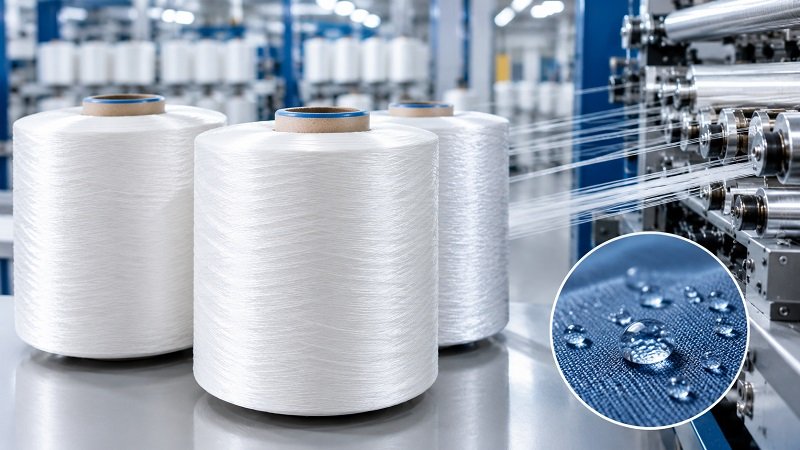
Some modified PP filament yarns demonstrate a phenomenon known as the Lotus Effect, where water forms droplets on the surface instead of spreading across it.
This property can be especially useful for industrial textiles that require moisture resistance while maintaining lightweight construction and mechanical strength.
Unlike ordinary textile yarns, high-tenacity water-repellent PP filament yarn is engineered for applications requiring both durability and controlled surface performance.
How Does Water-Repellent PP Filament Yarn Work?
The water-repellent behavior of polypropylene yarn comes from its chemical structure and surface characteristics.
Polypropylene molecules have a naturally low affinity for water. As a result, the fibers do not absorb moisture as readily as materials such as cotton or nylon.
Additional hydrophobic modification can improve the yarn’s surface behavior, encouraging water droplets to bead rather than spread.
Understanding the Lotus Effect
The Lotus Effect describes a water-repellent surface where droplets maintain a rounded shape and can roll away easily.
In industrial yarn applications, this behavior depends on the surface chemistry and microscopic texture of the filaments.
A high water contact angle indicates stronger resistance to surface wetting. However, the actual performance depends on the yarn formulation, fabric construction, and testing conditions.
It is important to understand that water-repellent yarn does not automatically make a finished fabric waterproof. Fabric density, coatings, seams, and manufacturing methods also influence water penetration.
Key Benefits of Water-Repellent PP Filament Yarn
1. Excellent Moisture Resistance
One of the biggest advantages of water-repellent PP filament yarn is its ability to resist moisture absorption.
This property helps reduce water retention in textile structures and makes polypropylene useful for products exposed to wet conditions.
2. Lightweight Construction
Polypropylene has a lower density than many commonly used synthetic textile fibers, including polyester and nylon.
Its lightweight characteristics make it suitable for products where reducing material weight is important.
Applications such as industrial covers, technical fabrics, and outdoor textile structures can benefit from this property.
3. High Tensile Strength
High-tenacity PP filament yarn is designed to provide strength for demanding textile applications.
The actual tensile strength depends on the yarn grade, drawing process, linear density, and construction.
Manufacturers can select appropriate specifications based on the mechanical requirements of their finished products.
4. Good Chemical Resistance
Polypropylene offers good resistance to many acids, alkalis, and other chemicals under suitable conditions.
This makes it useful for certain industrial filtration, protective textile, and geotextile applications.
However, chemical resistance should always be checked against the specific substances, concentrations, temperatures, and exposure conditions involved.
5. Reduced Moisture-Related Problems
Because polypropylene absorbs very little water, it can help reduce problems associated with moisture retention.
Its hydrophobic characteristics may also make textile structures less favorable for moisture-related deterioration.
However, resistance to mold growth depends on the complete textile product, including finishes, contaminants, and storage conditions.
6. Versatile Processing Options
Water-repellent PP filament yarn can be developed for different textile manufacturing processes, including weaving, knitting, and other technical fabric production methods.
The appropriate yarn construction and finish should be selected according to the equipment and intended application.
Industrial Applications of Water-Repellent PP Filament Yarn
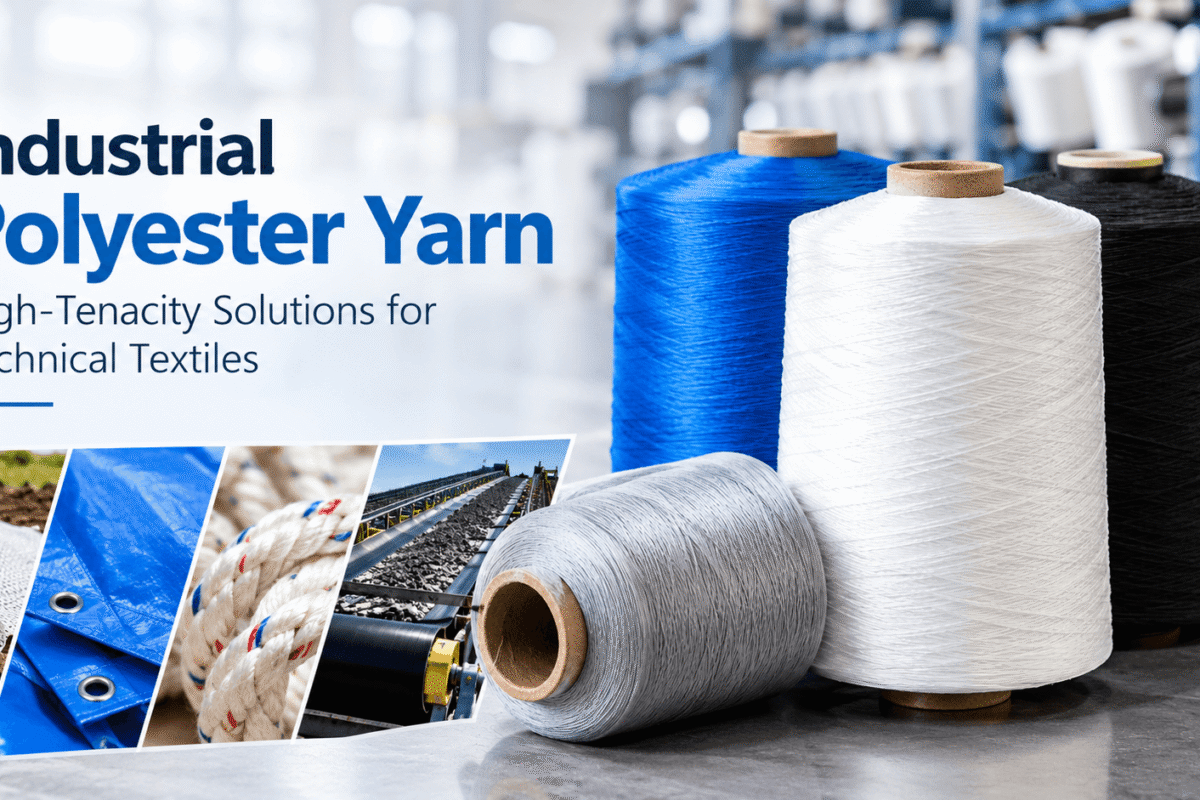
Water-repellent polypropylene yarn is useful in several industrial sectors where strength, low moisture absorption, and durability are important.
Geotextiles and Civil Engineering
Geotextiles are used in construction, drainage, separation, reinforcement, and erosion-control applications.
Polypropylene is widely used in geotextile manufacturing because of its lightweight properties, chemical resistance, and low moisture absorption.
Water-repellent filament yarn may be suitable for specialized geotextile constructions where surface wetting behavior is important.
The final material must meet the mechanical, filtration, and hydraulic requirements of the project.
Tarpaulins and Outdoor Covers
Tarpaulins and protective covers are frequently exposed to rain, humidity, and changing weather conditions.
Water-repellent PP filament yarn can contribute to textile constructions designed to reduce surface wetting.
However, outdoor products may also require UV stabilization, suitable coatings, and appropriate fabric construction.
Industrial Filtration Fabrics
Polypropylene filament yarn is used in selected filtration applications because of its chemical resistance and low moisture absorption.
Water-repellent properties can be useful where controlled interaction between liquids and textile surfaces is required.
The suitability of the yarn depends on the filtration process, chemical environment, and required permeability.
Agricultural Textiles
Agricultural applications may include protective covers, woven fabrics, and technical textile structures.
Polypropylene’s low weight and moisture resistance can make it useful in these products.
Manufacturers should consider sunlight exposure, temperature, and expected service life when selecting yarn for outdoor agricultural applications.
Packaging and Industrial Fabrics
Polypropylene yarn is also used in industrial textile constructions for packaging and protective applications.
High-tenacity grades can provide the strength required for selected woven structures, while water-repellent characteristics can help reduce surface wetting.
The yarn specification should match the load requirements and intended operating environment.
How to Choose the Right Water-Repellent PP Filament Yarn
Choosing the correct yarn requires more than simply checking whether it repels water.
Manufacturers should review several technical factors before purchasing.
Yarn Denier and Filament Count
Denier measures the linear density of yarn. The required denier depends on the thickness, strength, and construction of the finished textile.
Filament count also affects yarn handling and fabric characteristics.
Tensile Strength and Elongation
High-tenacity yarn should provide mechanical performance suitable for the intended application.
Buyers should request tensile strength and elongation data to confirm compatibility with their production requirements.
Water Contact Angle
The water contact angle is an important indicator of surface water repellency.
Buyers should ask whether the supplier provides test results and whether the measurements reflect the yarn or finished fabric.
Chemical and Environmental Resistance
The yarn should be suitable for its operating environment.
For outdoor applications, UV resistance and long-term weathering behavior are particularly important.
Processing Compatibility
Before placing a large order, manufacturers should confirm that the yarn can run through their existing production equipment.
Trial samples can help evaluate processing behavior, tension consistency, and finished-product performance.
Where to Buy Water-Repellent PP Filament Yarn
Finding a suitable industrial yarn supplier is important for manufacturers that need consistent quality and dependable material specifications.
When evaluating suppliers, buyers should consider product documentation, technical support, available yarn grades, quality consistency, and delivery arrangements.
TechTex Fiber provides information about specialized hydrophobic polypropylene yarn designed for technical textile applications.
Manufacturers looking to buy water-repellent PP filament yarn can explore the product information and contact the supplier to discuss specifications, availability, and application requirements.
Before ordering, it is advisable to request technical details such as yarn linear density, tenacity, elongation, water-repellency performance, and available finishing options.
This helps ensure the selected material matches the intended manufacturing process.
Why Water-Repellent PP Yarn Matters for European Manufacturers
European technical textile manufacturers often work with demanding product specifications and diverse operating environments.
Materials used in construction, agriculture, filtration, and industrial protection must meet defined performance requirements.
Water-repellent PP filament yarn offers a useful combination of low moisture absorption, lightweight construction, and mechanical strength.
For manufacturers seeking specialized technical textiles, selecting the correct yarn can help support consistent processing and product performance.
Reliable sourcing is also important. Maintaining consistent material specifications across production batches can reduce unexpected variations in manufacturing.
Conclusion
Water-repellent PP filament yarn is a practical material for industrial textile applications requiring moisture resistance, low weight, and mechanical durability.
Its naturally hydrophobic polymer structure, combined with suitable surface modification, can provide enhanced water-repellent behavior.
From geotextiles and tarpaulins to filtration fabrics and agricultural textiles, polypropylene filament yarn offers versatility across different manufacturing sectors.
Before purchasing, manufacturers should evaluate the yarn’s mechanical properties, water-repellency performance, processing compatibility, and environmental requirements.
Choosing a suitable specification and supplier is an important step toward producing reliable technical textile products.
Frequently Asked Questions
Q1. What is water-repellent PP filament yarn?
Water-repellent PP filament yarn is a polypropylene-based synthetic yarn designed to resist surface wetting. It combines polypropylene’s naturally low moisture absorption with enhanced hydrophobic properties for industrial textile applications.
Q2. What are the main applications of water-repellent PP filament yarn?
Common applications include geotextiles, tarpaulins, industrial filtration fabrics, agricultural textiles, protective covers, and specialized technical fabrics.
Q3. Is water-repellent PP filament yarn waterproof?
Not necessarily. Water-repellent yarn helps prevent water from spreading across the fiber surface, but complete waterproofing depends on fabric construction, coatings, seams, and other factors.
Q4. What is the Lotus Effect in polypropylene yarn?
The Lotus Effect describes a highly water-repellent surface that encourages droplets to form rounded beads and roll away. Specialized surface modifications can create similar behavior in polypropylene yarn.
Q5. Where can I buy water-repellent PP filament yarn in Europe?
Manufacturers can explore specialized industrial yarn suppliers such as TechTex Fiber, which provides information about hydrophobic PP filament yarn for technical textile applications.